
Opening Site Visit: Košice shares its know-how with European cities
Urban innovations arise where local government experience, technological know-how, data, urbanism, participation and innovation meet. The SAM-SUD project is built on expert cross-sector cooperation, which in Košice connects different types of expertise into concrete solutions for urban asset management. The first Opening Site Visit showed that this linking of experiences can create tools that can also be used in other European cities. Košice offers partners from Celje, Mannheim and Fuenlabrada specific know-how: digital tools for urban asset management, working with data, modelling possible building uses and participatory approaches that help local governments make decisions more accurately and in touch with the needs of their residents.
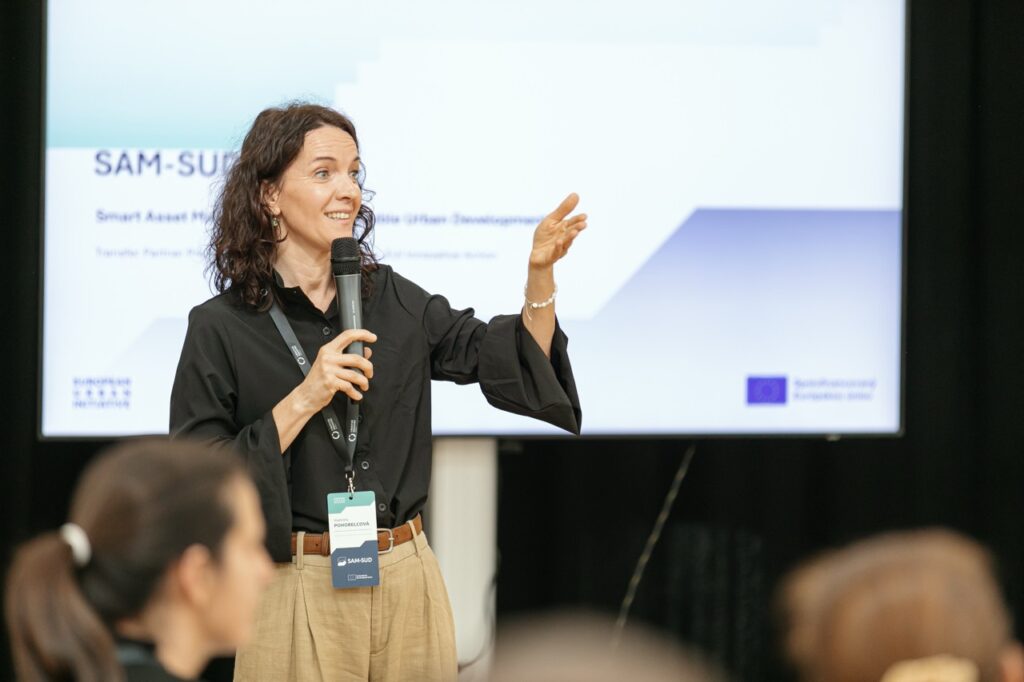
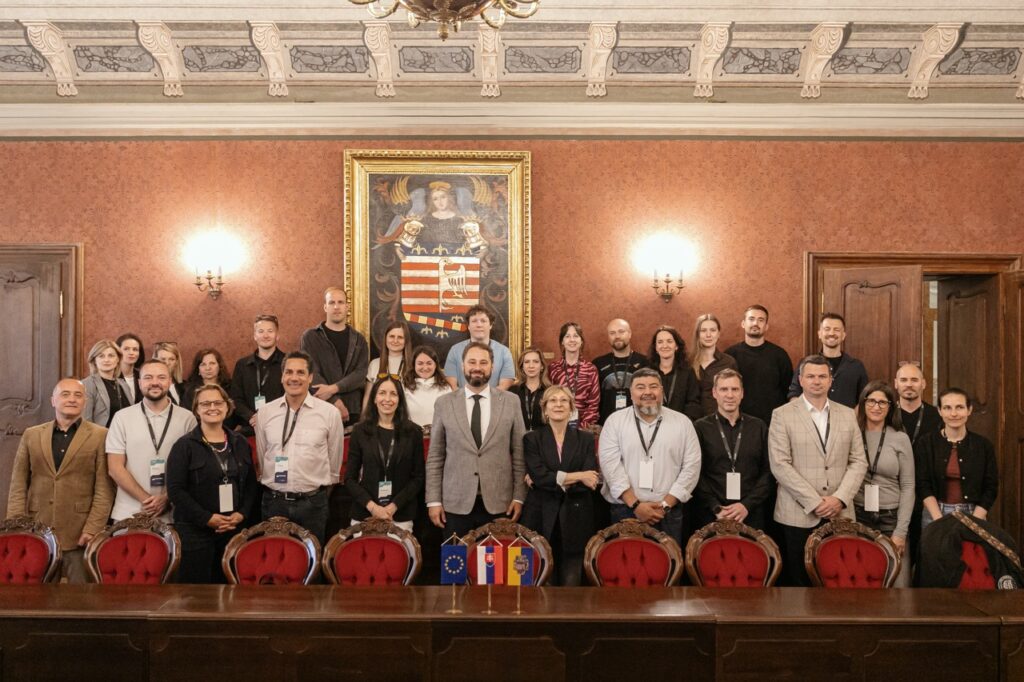
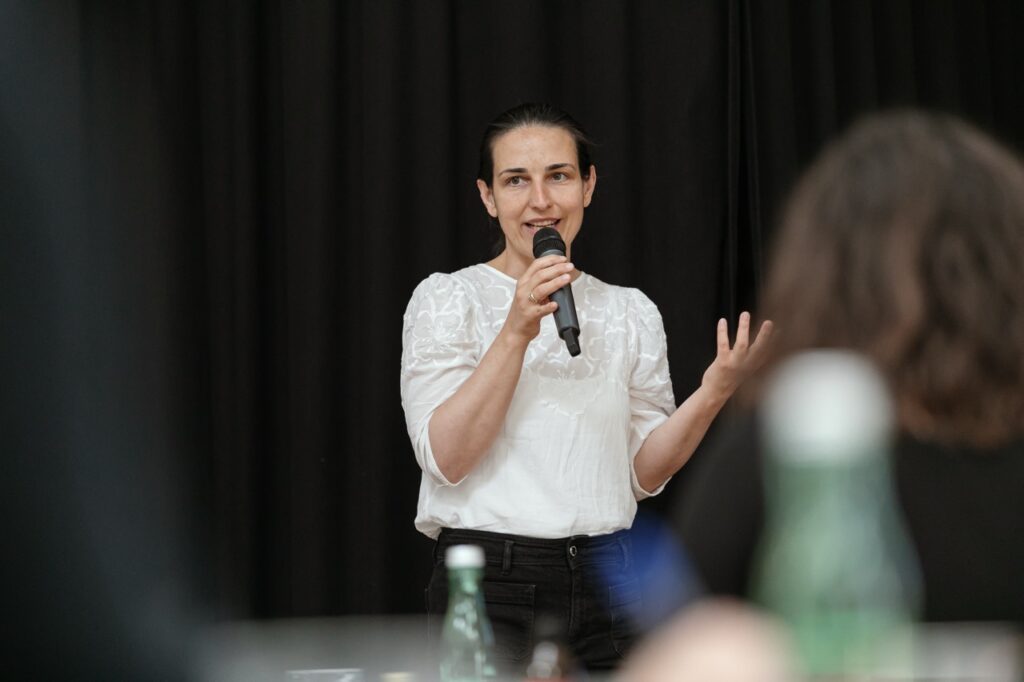
The Opening Site Visit to Košice in mid-May brought city representatives, local project partners, European Urban Initiative (EUI) experts and transfer partners.
The aim of the event was to present innovative solutions directly in the environment where they are created and will be tested, to create a space for expert discussion and to jointly set up a three-year process of their transfer to other European cities.
From digital tools to vibrant urban spaces
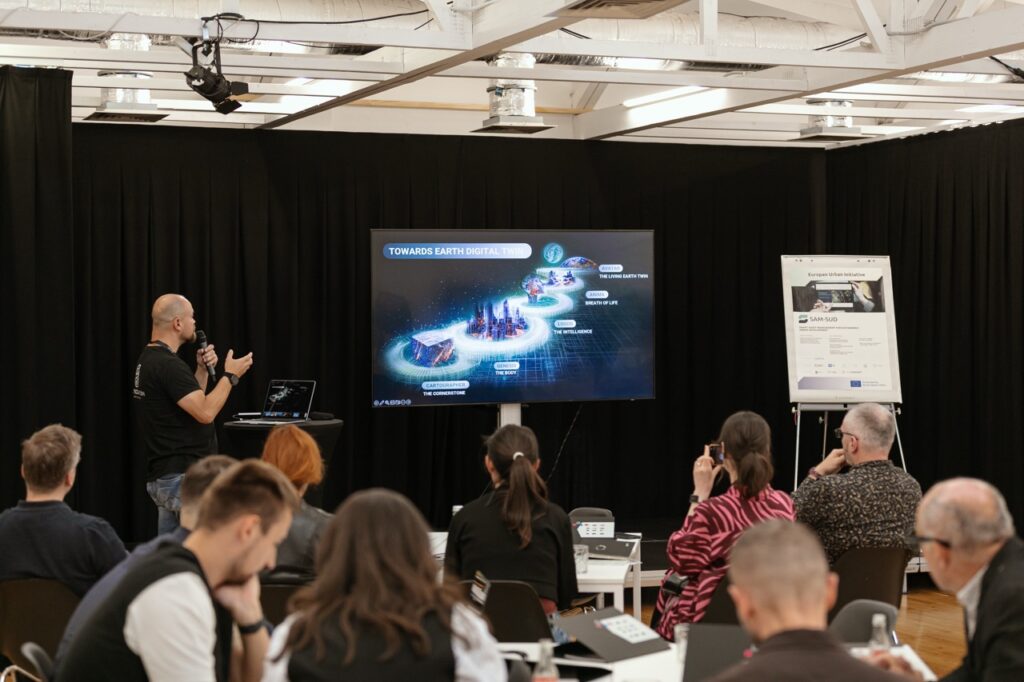
During two working days, the partners had the opportunity to learn about the Košice approach to smart asset management in practice. The city of Košice and local project partners presented solutions that are created in cooperation with the organizations Creative Industry Košice, Geodeticca Vision, TUKE, KAJO, K13 and Východné pobrežie. The discussion focused mainly on how local governments can better work with data, understand the potential of their assets and make decisions that are based on technical possibilities and people’s needs.
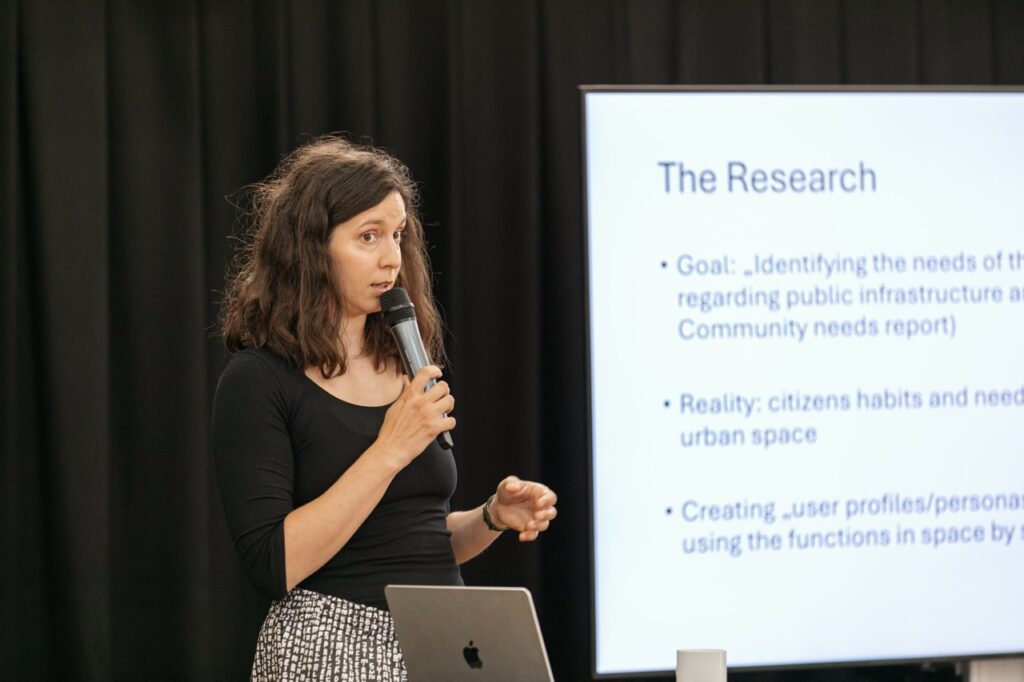
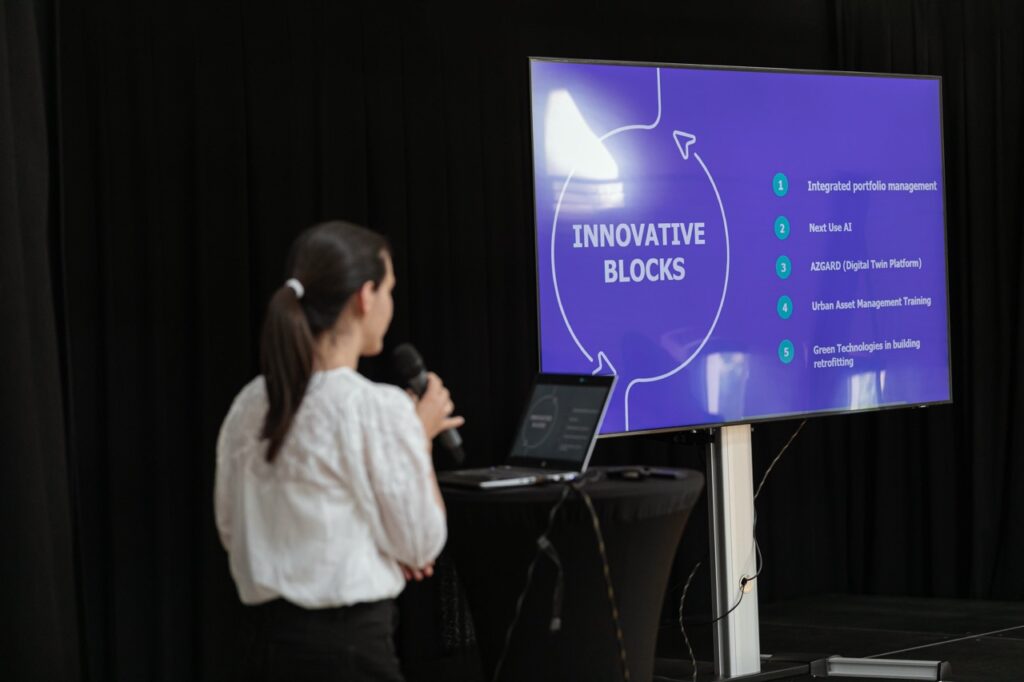
The partners learned about the preparation of the NextUse AI tool, which works with spatial patterns, functions in the territory and data on the behavior of residents. The program also included a presentation of an extensive Košice survey that maps the needs of residents, the availability of services, preferences in the use of urban spaces and differences between individual user groups. Such data should help create user profiles and better estimate what functions may be meaningful for specific locations.
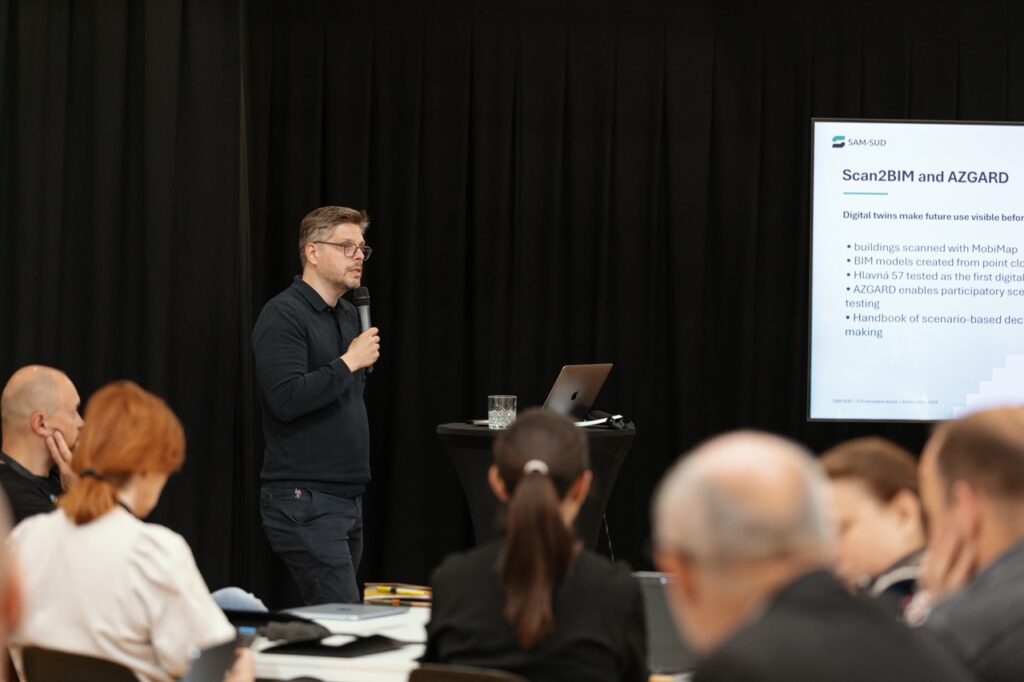
Great interest was also aroused by demonstrations of the AZGARD platform, which allows visualizing various scenarios of future use of buildings and involving the public in their evaluation. The partners also discussed the Urbis Pictus tool, which connects energy data with satellite, aerial and drone data. Practical issues of data ownership, security, accuracy of data and availability of digital tools for different groups of residents were raised.
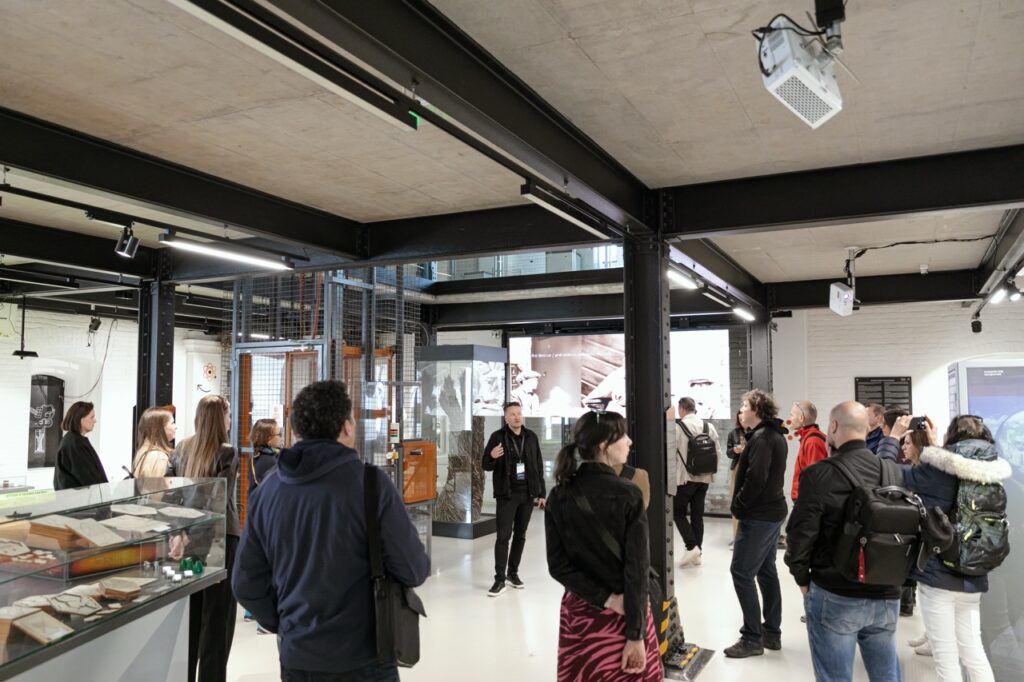
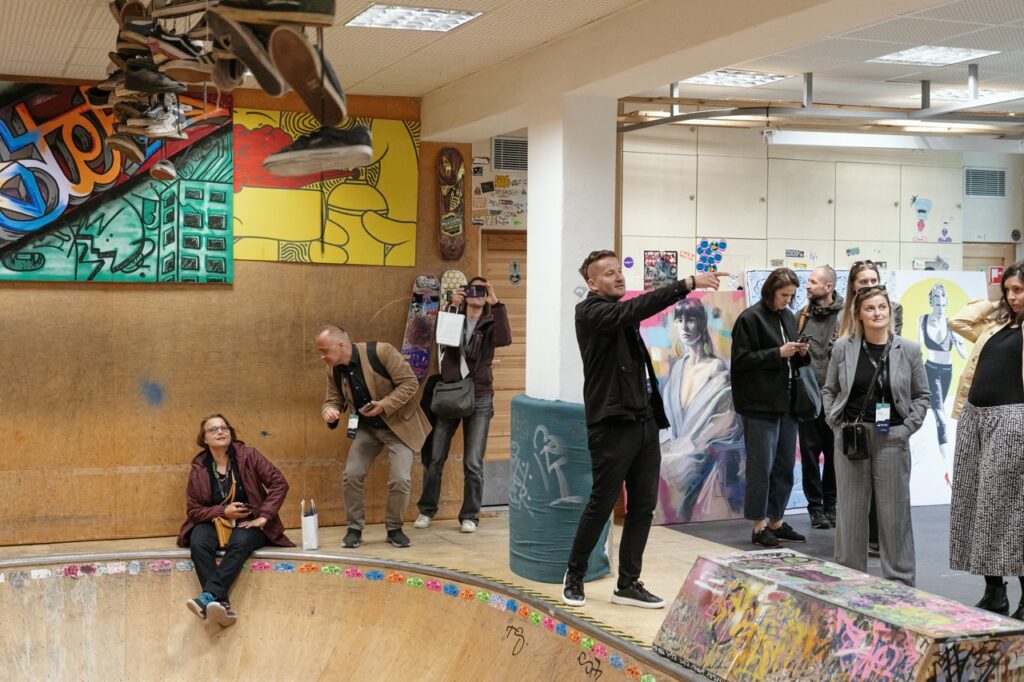
Field visits were an important part of the program. The partners visited the pilot building at Hlavná 57, Kasárne/Kulturpark, the historical city hall of Košice and the network of community centers Výmenníky. These places showed that SAM-SUD is also based on the specific experience of Košice with public space, community work and the gradual transformation of urban locations into active places for residents.
What connects Celje, Fuenlabrada and Mannheim with Košice?
The transfer partners came to Košice with their own challenges. Celje focuses on the possibilities of using artificial intelligence in the energy management of public buildings and on better connecting the city’s data with the local energy ecosystem. Fuenlabrada is solving how to use existing public buildings more efficiently in the context of changing demographics, an aging population and new needs of residents. Mannheim is looking for tools that will help it work with a large portfolio of municipal buildings and prepare understandable documents for political decision-making.
These different starting points have shown that the transfer of Košice solutions will allow the adaptation of specific tools and methodologies to local conditions. It is at this point that the value of the transfer becomes apparent: Košice brings solutions, the partners bring feedback from other urban, technical and institutional environments.
From presentations to collaborative work
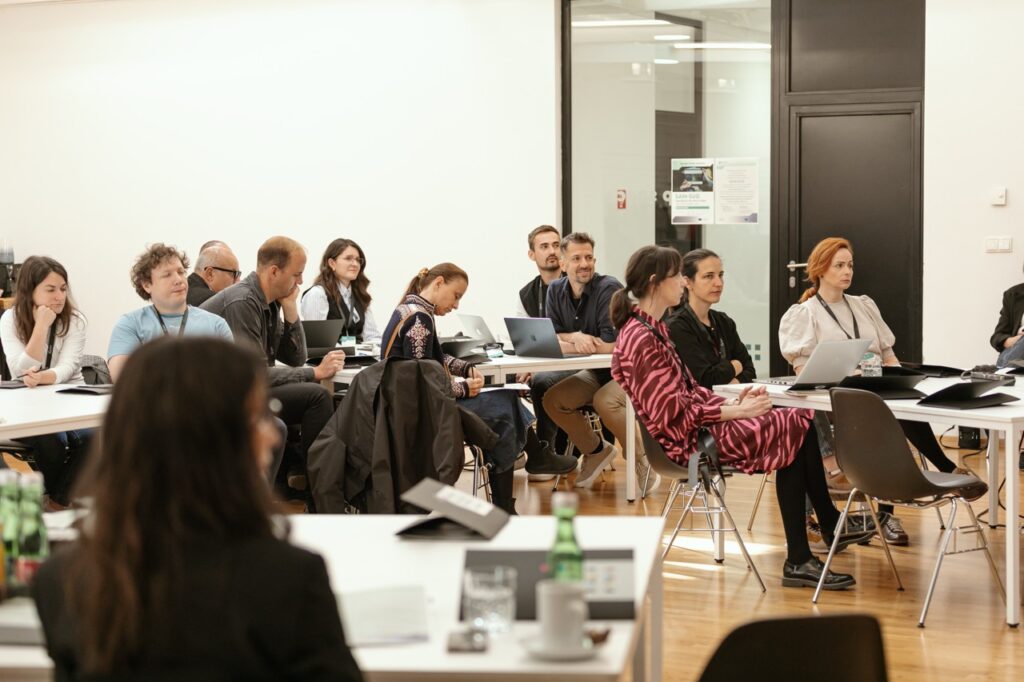
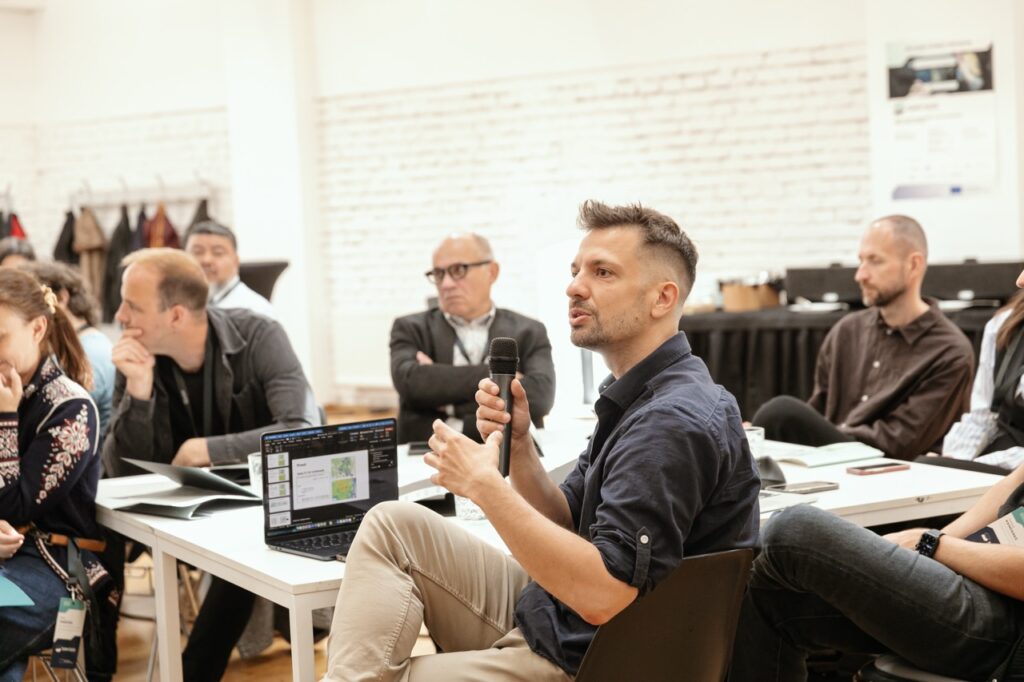
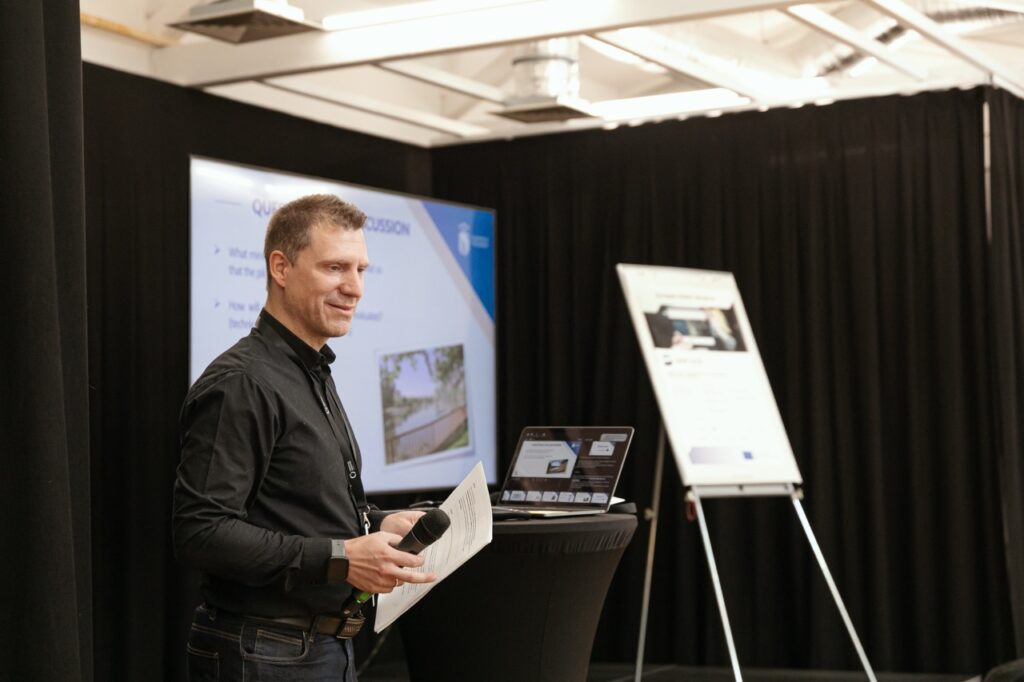
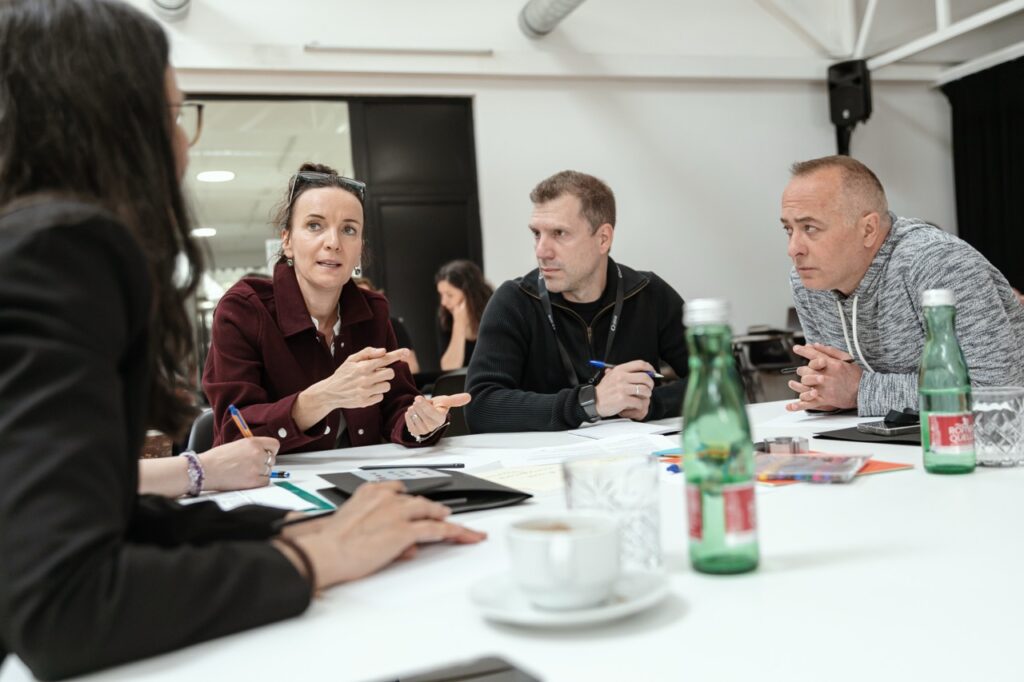
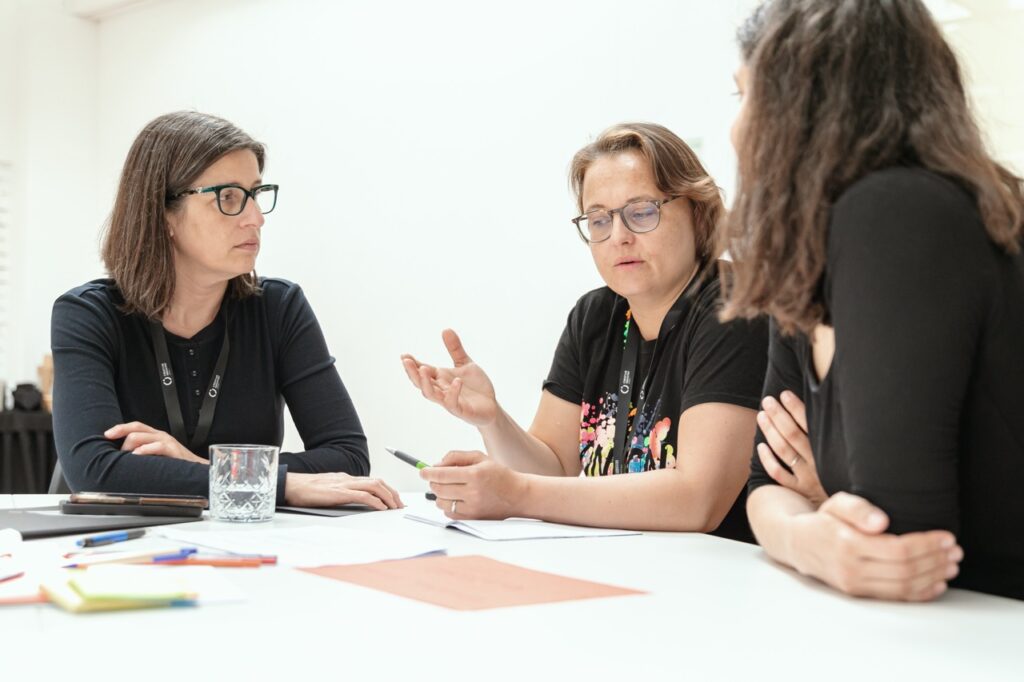
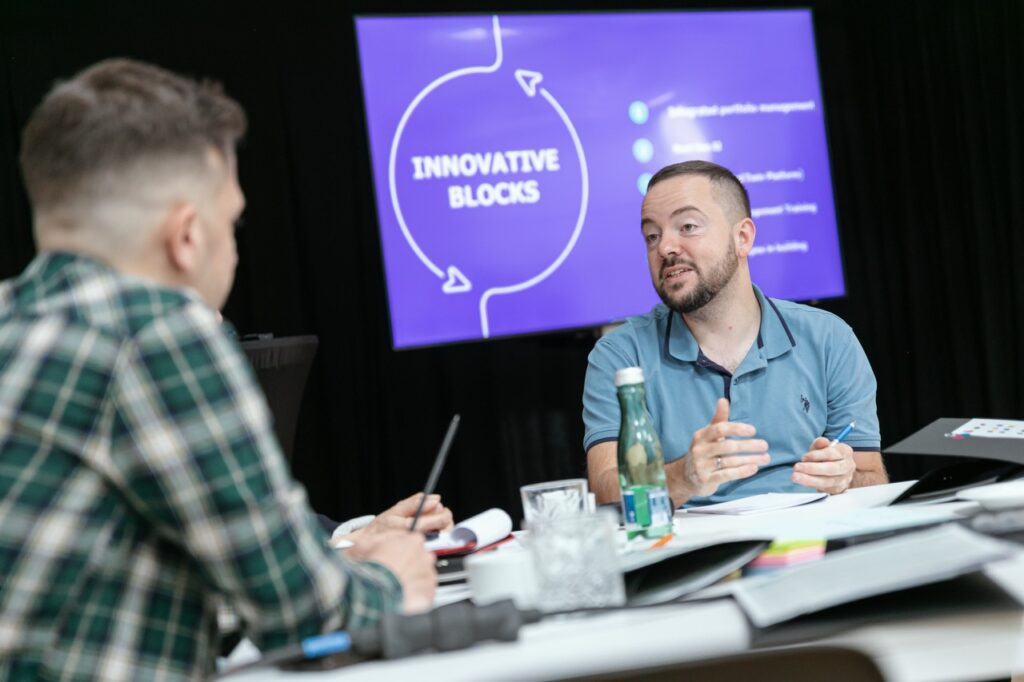
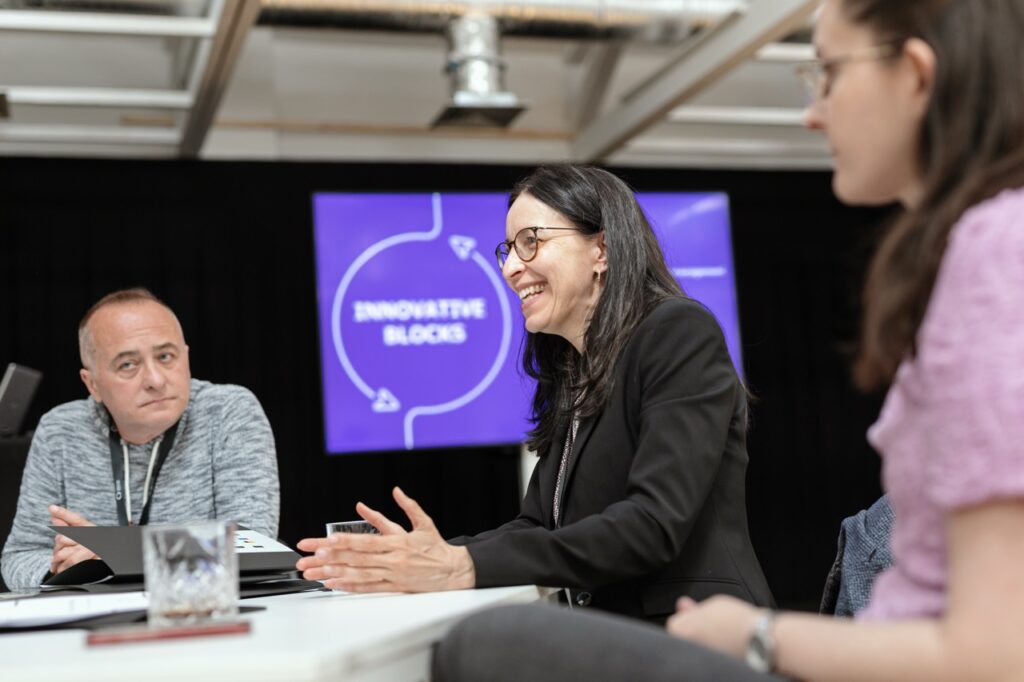
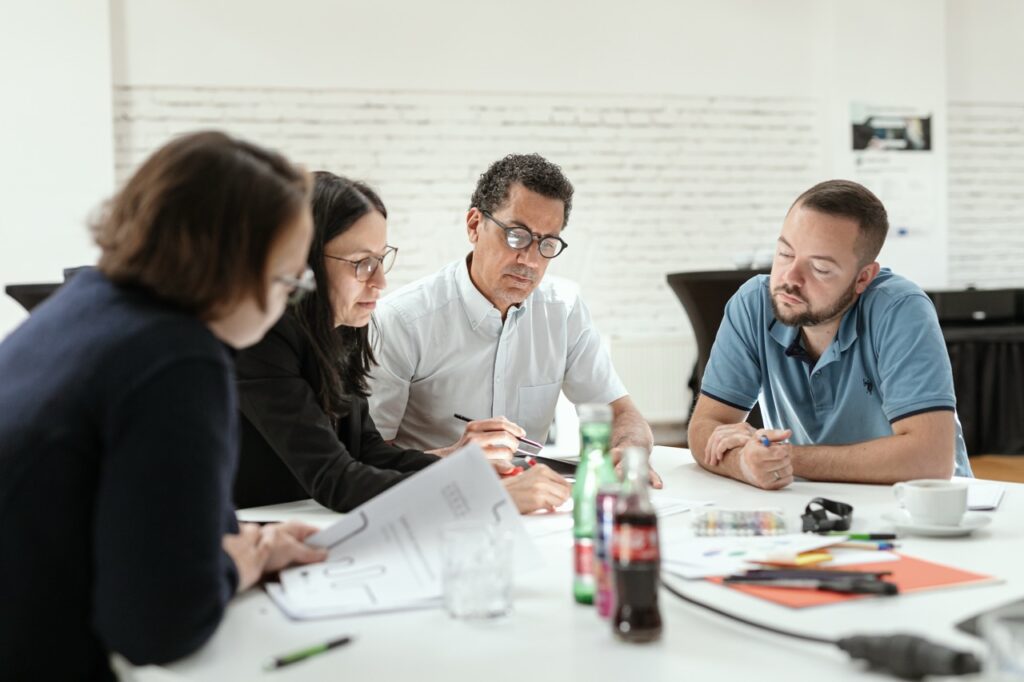
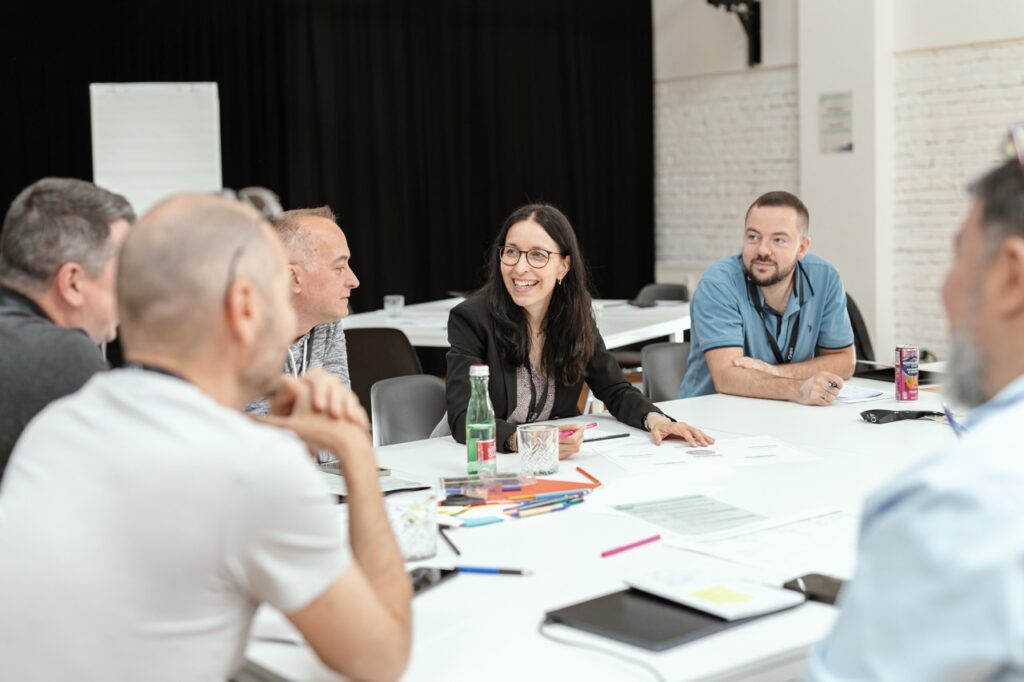
The program did not stop at presenting the tools. During the visit, the partners also worked on how individual parts of the solution could be transferred to their own environment. The workshop on the SAM-SUD Innovation Matrix was led by EUI Transfer Expert Dr. Antonella Radicchi together with EUI Innovative Actions Expert Katalin Bunyevácz. In it, the partners discussed with the Košice project partners at thematic tables and assessed which elements of the solution were most relevant and best transferable for them.
The discussions showed a strong interest in the AZGARD platform, the city’s digital twin, and selected parts of the NextUse AI tool. The partners particularly saw the potential of the GIS platform, the facade assessment model, and the AI recommendation model, which can help municipalities better compare different scenarios and prepare arguments for further decision-making.
The next workshop, Transfer in Action, was led by Dr. Antonella Radicchi. In it, the partners started working on the first drafts of transfer plans and on how to involve key actors in their cities in the process. One of the activities focused on a model user of public space – a cultural actor looking for an accessible and flexible place for community activity. This example helped to move the debate from the level of technology to the people who actually use buildings and urban spaces.
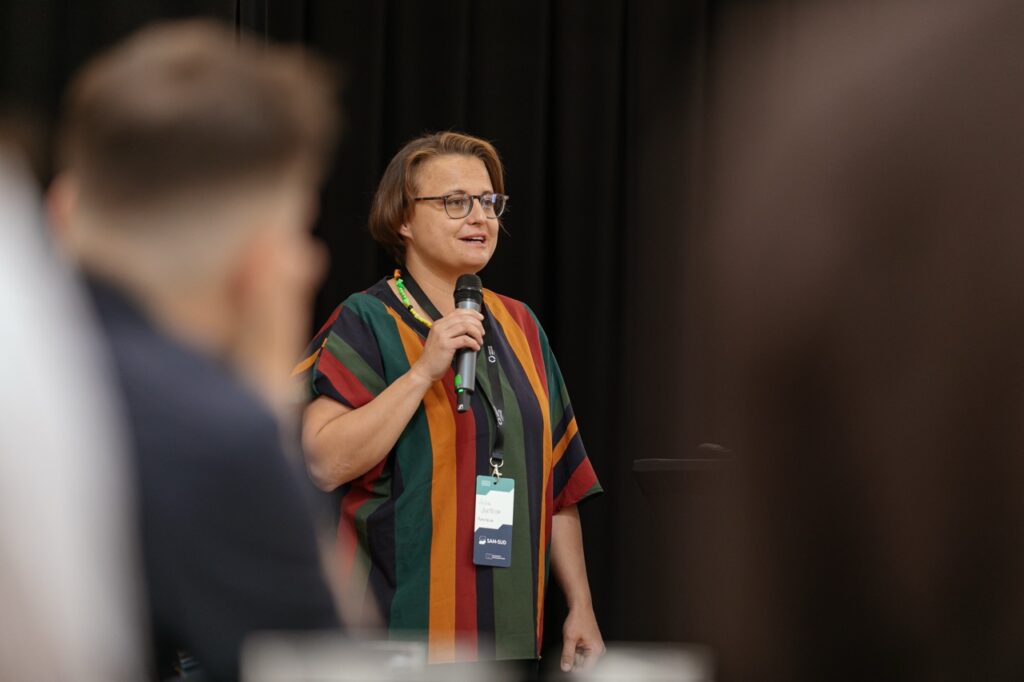
“Through my work as a Transfer Expert supporting EUI Innovation Actions across 28 EU cities, I’ve had a privileged view of where real urban innovation is emerging across Europe.
Dr Antonella Radicchi, EUI Innovative Actions Transfer Expert
What makes SAM-SUD truly stand out is that it proposes a systemic model for urban retrofitting in Košice, going beyond isolated technical solutions.
Its uniqueness lies in how it integrates, within a single portfolio asset management framework, several innovative dimensions: advanced digital intelligence through AI and digital twin technologies, green retrofitting solutions, and capacity-building through structured training.
What makes it especially relevant for European cities is its strong transferability dimension, with partner cities such as Celje, Fuenlabrada, and Mannheim already committed to testing and adapting its components through local pilot actions, paving the way for long-term scaling across Europe.”
First transfer directions
Each partner city outlined its own direction for the pilot solution during the visit. Celje wants to work with NextUse AI as a technical input and gradually connect it with energy management and portfolio management of the city’s assets. Fuenlabrada emphasized the need for a clear internal vision, selection of a pilot building, legal framework, data management and involvement of other departments of the municipality. Mannheim wants to use AZGARD and NextUse AI to prepare clear, visual and data-based recommendations for decision-making on city buildings.
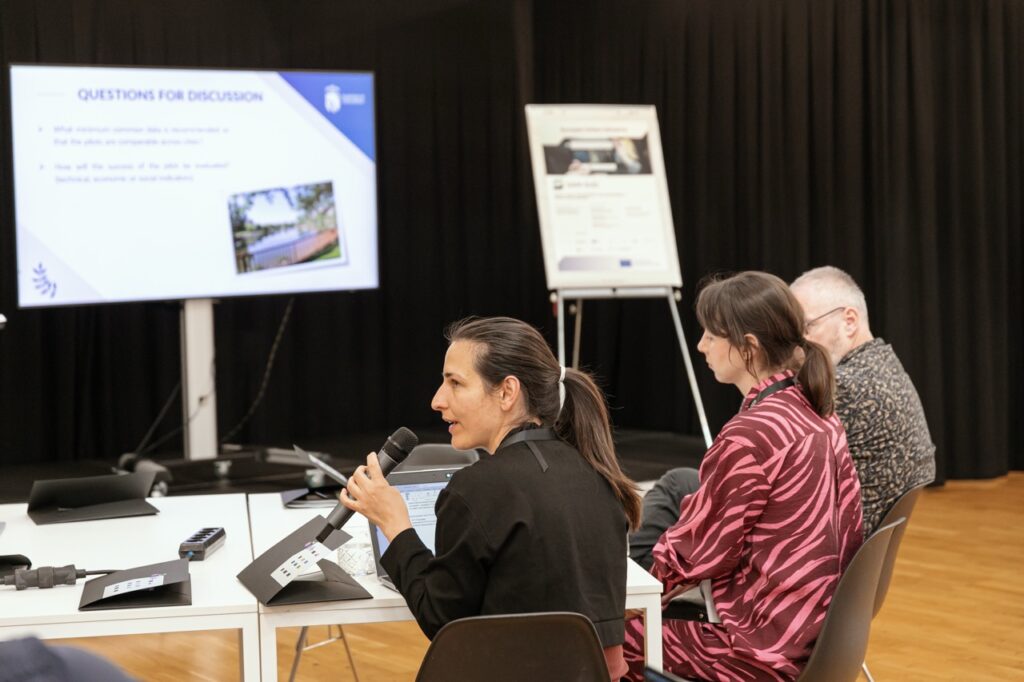
For the Slovak partners, such a process is also valuable in retrospect. The partners’ questions focused on what data is needed to transfer the solution, how to connect existing systems in the cities, how to evaluate the success of the pilots and how to set up digital tools so that they can be used in the daily work of the municipalities. These suggestions will help to further refine the solutions and prepare them for wider use.
What can Slovak partners offer to European cities?
Slovak partners of the SAM-SUD project bring to the European transfer a combination of technologies, data expertise and experience with cultural and community transformation of urban spaces. They can offer cities in particular tools and methodologies that help map the potential of public buildings, create digital models and digital twins, analyze data, visualize future use scenarios and connect technical decision-making with citizen participation.
The value of the Košice approach lies in connecting multiple layers of the solution. SAM-SUD combines artificial intelligence, digital twins, GIS and data analytics with the practical experience of the city, the creative sector, research partners and organizations that have been working with public space, communities and changing unused locations into active urban places for a long time.
This process is of strategic importance for Košice. In the project, the city develops its own solutions, tests them in a real environment and passes them on to partners in Slovenia, Spain and Germany. The ability to transfer the developed tools strengthens the credibility of the local innovation ecosystem and shows that the solutions emerging in Košice have the potential to work in a wider European context.
The transfer also brings important feedback. The experience of cities with different technical backgrounds, budgets and management systems will help the Košice partners to refine the solutions so that they are scalable, practically usable and understandable for municipalities with different needs in the future.
Feedback and next steps
The final evaluation of the visit highlighted the high-quality organization, practical demonstrations, the openness of the host team and the space for formal and informal exchange of experiences. The partners appreciated that they were able to see the tools in a concrete environment and discuss them directly with their creators. At the same time, they mentioned the need to delve deeper into technical details, software applications, internal involvement of city departments and rules for access to digital tools.
In the following period, the partners will continue to prepare transfer plans and pilot scenarios. The process will include joint online activities, professional training and further working meetings that will help to translate the first ideas into concrete steps in the cities of Celje, Mannheim and Fuenlabrada.
The power of face-to-face meetings
The Opening Site Visit confirmed that personal meetings and field visits are irreplaceable in similar projects. Ultimately, the greatest value of the SAM-SUD project is not only the technologies themselves, but the ability of cities to learn from each other. The opportunity to see the tools in action in a real local context, to discuss technical details directly with their creators and to create new professional connections is what makes the transfer of innovations truly successful.
What will happen next?
The May visit was the first step in a longer process. In the coming period, the European partners will prepare detailed transfer plans and pilot scenarios to be able to grasp the Košice solutions in the conditions of their cities. The next major milestone will be the Deep Dive Visit in 2027, during which the partners will return to Košice to evaluate their progress and further develop the joint transfer process.
Experiences that lead to European innovation
The first Opening Site Visit set the foundation for the next phase of the project, in which regular exchange of experiences, feedback from partners and gradual adaptation of solutions to different urban conditions will be important. For Košice, this process is an opportunity to show that quality innovations can also arise outside of large European metropolises, if local government, research, technology, the cultural and creative sector and practical knowledge of the local environment are interconnected. SAM-SUD thus strengthens the position of Košice as a city that can transform its own experience into know-how usable in the wider European space.

















Projekt je spolufinancovaný Európskou úniou.